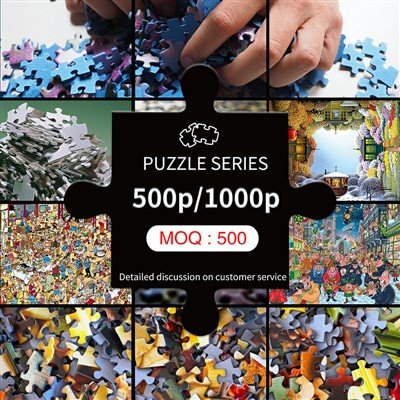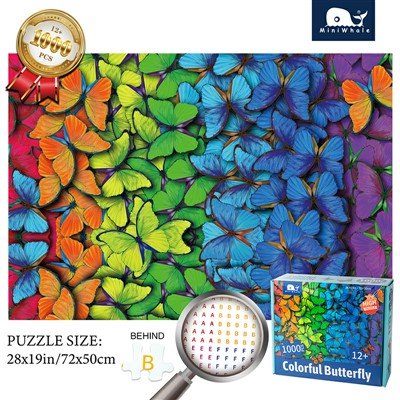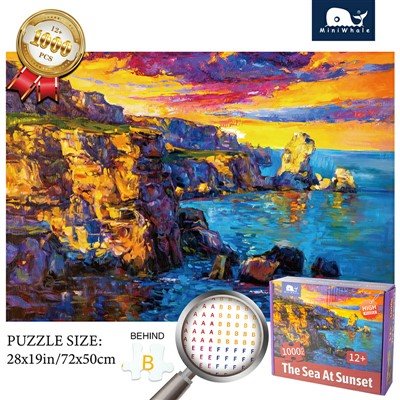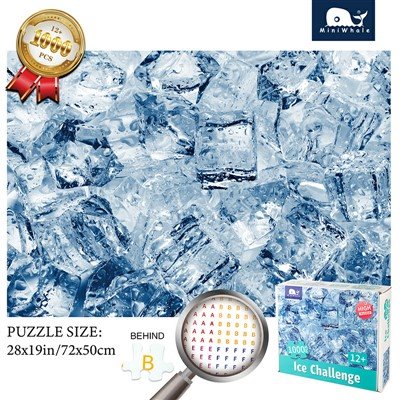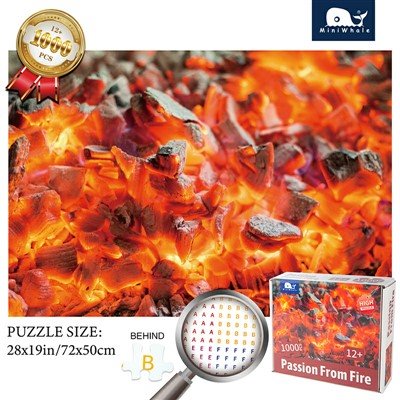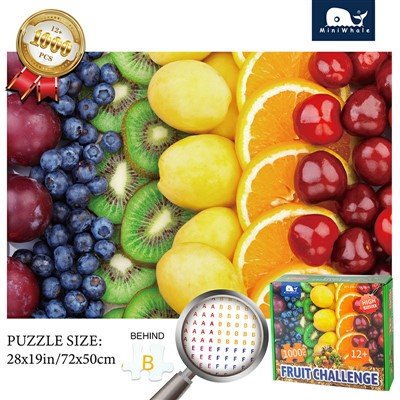
Single-sided puzzles: Puzzles often feature natural scenery, buildings, and familiar patterns. Castles and mountains are two traditional themes, but any picture or image can be used as puzzle material. Some companies even offer services to create puzzles from personal photographs.
Double-sided puzzles: Some types of puzzles have patterns printed on both sides of the pieces. Players can assemble the puzzle using either side's pattern. This increases the difficulty because it's hard to determine which side is correct given the pieces.
3D puzzles: In addition to traditional flat puzzles, there are different types of 3D puzzles. 3D puzzle pieces are often made of more solid materials like wood or foam. Their spatial characteristics often increase the difficulty, requiring players to assemble the pieces in a specific order: if a piece in a completed section is misplaced, the remaining pieces may become impossible to complete.
Another common toy is the "puzzle box": players can assemble small drawers or boxes with interlocking pieces similar to flat puzzle pieces to store items.
Spherical Puzzles
Spherical puzzles can be seen as an intermediate type between flat and three-dimensional puzzles. Similar to flat puzzles, their spherical surface is a single-layer structure made of cardboard pieces; however, its final shape is a three-dimensional form with length, width, and height. Spherical puzzle designs often imitate geographical and astronomical models such as globes and moons; the Wikipedia logo is an example of a spherical puzzle.
Virtual Puzzles
In addition, some software can simulate physical puzzles using computer graphics. The advantage of virtual puzzles is that they do not require manual cleaning and there is no risk of losing pieces.