
As a jigsaw puzzle supplier, I've had the privilege of witnessing the joy and fascination that these intricate puzzles bring to people of all ages. One question that often arises among puzzle enthusiasts is whether jigsaw puzzles have a specific pattern for assembling. In this blog post, I'll delve into this topic, exploring the science behind jigsaw puzzle assembly and sharing some insights based on my experience in the industry.
The Science of Jigsaw Puzzle Assembly
Jigsaw puzzles are not just a source of entertainment; they also engage our cognitive functions, including problem-solving, spatial reasoning, and pattern recognition. When we assemble a jigsaw puzzle, we are essentially using these skills to piece together a larger picture. While there isn't a one-size-fits-all pattern for assembling jigsaw puzzles, there are some general strategies that can make the process more efficient and enjoyable.
One of the most common approaches is to start by sorting the puzzle pieces into groups based on their shape, color, or edge characteristics. This initial sorting helps to organize the pieces and makes it easier to find the ones you need as you progress through the assembly. For example, you might separate the edge pieces from the interior pieces, or group the pieces by color to create sections of the puzzle.
Another strategy is to focus on assembling the edges of the puzzle first. The edge pieces are typically easier to identify and connect, and they provide a framework for the rest of the puzzle. Once the edges are complete, you can start filling in the interior of the puzzle, working from the outside in. This approach can help you maintain a sense of progress and make the assembly process more manageable.


In addition to these general strategies, some people prefer to use a more intuitive approach to puzzle assembly. They might start by finding a piece that catches their eye and then build around it, gradually connecting other pieces as they go. This method can be more creative and spontaneous, but it may also require more patience and trial-and-error.
Factors That Influence Assembly Patterns
The assembly pattern of a jigsaw puzzle can be influenced by several factors, including the complexity of the puzzle, the size of the pieces, and the individual's personal preferences and skills.
- Complexity of the Puzzle: Puzzles with more pieces and intricate designs tend to require more planning and organization. In these cases, a more systematic approach to assembly may be necessary to ensure that all the pieces fit together correctly. On the other hand, simpler puzzles with fewer pieces may allow for a more flexible and intuitive assembly process.
- Size of the Pieces: The size of the puzzle pieces can also affect the assembly pattern. Larger pieces are generally easier to handle and connect, while smaller pieces may require more precision and dexterity. Some people may find it easier to work with larger pieces, while others may prefer the challenge of assembling smaller ones.
- Personal Preferences and Skills: Everyone has their own unique way of approaching jigsaw puzzles. Some people are more analytical and prefer to follow a structured plan, while others are more creative and enjoy the process of discovery. Your personal preferences and skills can play a significant role in determining the assembly pattern that works best for you.
Our Jigsaw Puzzle Offerings
At our company, we offer a wide range of jigsaw puzzles to suit different interests and skill levels. Whether you're a beginner looking for a simple puzzle to start with or an experienced puzzler seeking a more challenging one, we have something for you.
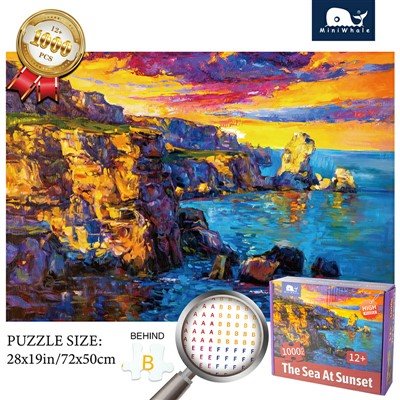
- Oil Painting 1000-Piece Jigsaw Puzzle: This beautiful oil painting puzzle features a stunning landscape scene, with rich colors and intricate details. It's a great choice for art lovers and puzzle enthusiasts alike.
- Animal Kingdom 1000-Piece Jigsaw Puzzle: Explore the wonders of the animal kingdom with this exciting puzzle. It features a variety of animals in their natural habitats, from lions and tigers to elephants and giraffes.
- Ice 1000-Piece Jigsaw Puzzle: Immerse yourself in a winter wonderland with this icy puzzle. It depicts a frozen landscape, with snow-capped mountains and glistening ice.
- Landscape Jigsaw Puzzle: Enjoy the beauty of nature with this scenic landscape puzzle. It features a peaceful countryside scene, with rolling hills, meadows, and a charming cottage.
- Coastal Scenery Oil Painting Puzzle: Relax and unwind with this coastal scenery puzzle. It showcases a beautiful beach scene, with crashing waves, sandy shores, and a colorful sunset.
Conclusion
In conclusion, while there isn't a specific pattern for assembling jigsaw puzzles, there are some general strategies that can make the process more efficient and enjoyable. By sorting the pieces, focusing on the edges, and using your personal preferences and skills, you can find the assembly pattern that works best for you.
If you're interested in purchasing jigsaw puzzles for yourself or as a gift, we invite you to explore our wide range of offerings. Our puzzles are made from high-quality materials and feature stunning designs that are sure to provide hours of entertainment. Whether you're a beginner or an experienced puzzler, we have something for you.
If you have any questions or would like to discuss your puzzle needs, please don't hesitate to contact us. We're here to help you find the perfect puzzle and ensure that you have a great experience.
References
- Bartlett, F. C. (1932). Remembering: A study in experimental and social psychology. Cambridge University Press.
- Hunt, E. B., & Agnoli, F. (1991). The Whorfian hypothesis: A cognitive psychology perspective. Psychological Review, 98(3), 377-389.
- Piaget, J. (1952). The origins of intelligence in children. International Universities Press.